



How To Prepare For Your First Motorcycle Track Day
5 Pro Tips
A motorcycle track day gives you the chance to explore your bike's performance in a controlled environment, away from traffic, junctions and the usual distractions of the road. But getting the most from the experience starts long before you roll out of the pit lane.
Preparation can make the difference between a day of learning and building confidence, or a day spent searching for missing kit, worrying about your bike or trying to solve avoidable problems.
Ruroc team rider and British Superstock Champion Taylor Mackenzie has spent years racing on circuit and over a decade coaching track riders. Here are his five essential tips to consider before your next track day.
Watch The Full Video With Taylor Mackenzie
More advice on preparing for your next motorcycle track day.
Prepare Your Bike Before You Arrive
Your first job is to make sure the bike is mechanically ready. Taylor says the best way to check over everything is to give the bike a good clean. It's amazing what you'll find when you pay close attention to your bike.
Track riding places slightly different demands on a motorcycle than an ordinary road ride. So really scrutinise the condition of your tyres, brakes, chain, sprockets and fluids well in advance of the event. Make sure nothing is loose, leaking or close to the end of its usable life.
Tyre pressures also deserve particular attention. The correct setting depends on the tyre, motorcycle, track conditions, temperature and whether tyre warmers are being used. Speak to the tyre technician at the circuit or follow the tyre manufacturer's track-specific guidance rather than relying on a generic figure. Dunlop, for example, advises that track pressures are operating targets, that readings should be taken promptly after returning to the paddock and that the ideal pressure can vary with the motorcycle, circuit, conditions and riding style.
Do not leave important maintenance until the night before. Last-minute work creates unnecessary stress and leaves little time to fix a problem properly, and may result in not fixing it at all.
A properly prepared bike allows you to concentrate on riding rather than wondering whether something is wrong beneath you.
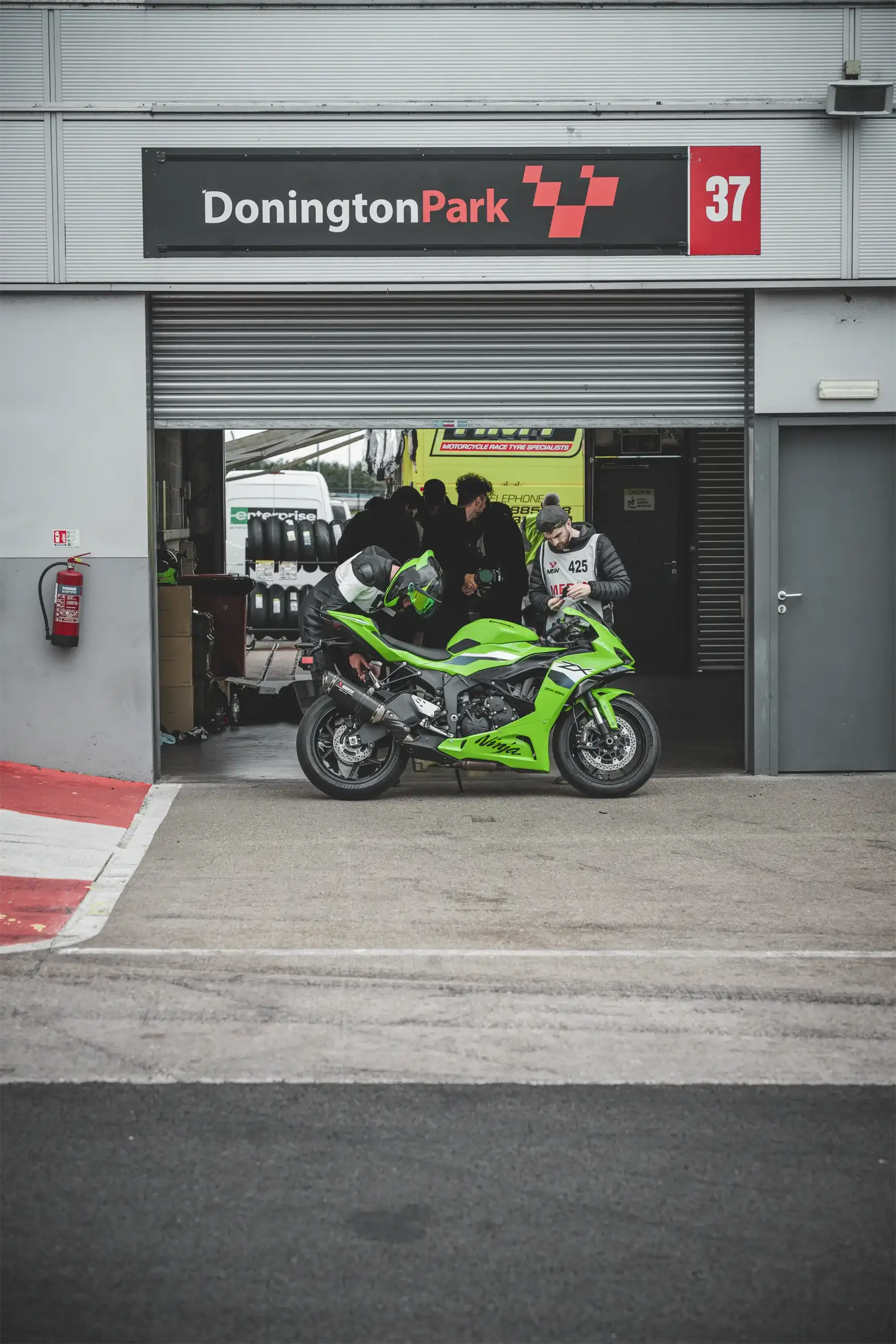
Check Your Kit And The Organiser's Requirements
Track-day equipment requirements can vary between circuits and organisers, so read the event information carefully.
At a minimum, you are likely to need an approved full-face helmet, suitable leathers, motorcycle boots, gloves and appropriate impact protection. Check everything for damage and make sure it still fits comfortably. Try your full setup before the event rather than wearing it for the first time in the paddock.
Helmet approval standards are especially important when preparing for a track day, as individual organisers may have their own requirements. In the UK, ACU Gold is widely recognised as the highest standard for track and racing use, and our AT4.0 TRACK helmet meets this certification. However, requirements can vary, so always check directly with the organiser before attending.
Pack your complete kit together the day before, including any removable armour, back protector, visors, ear protection and weather layers. It is much easier to work through a checklist at home than at 6am in a circuit car park.
Arrive With A Plan, Not A Lap-Time Target
For a first track day, the objective should not be to prove how fast you are.
Use the opening sessions to memorise the circuit: learn where the track goes, learn where the corners are and even watch a video of the track before you arrive. This will allow you to concentrate more on your riding rather than where you are going. After an initial sighting lap, build your pace progressively rather than trying to follow an experienced rider immediately.
Track days are designed to let riders experience their motorcycles and develop their skills within a controlled environment. Novice-specific events are intended to reduce pressure and help riders learn without feeling that they need to perform at the limit.
Choose one or two areas to work on during each session. That might be:
- Looking further through corners
- Using consistent braking markers
- Relaxing your upper body
- Improving your line through one section
- Becoming smoother with the throttle
Trying to improve everything at once usually creates tension. A clear, achievable focus makes it easier to recognise progress.
Use The Expertise Around You
One of the biggest advantages of a track day is the access it gives you to experienced instructors, tyre technicians and other riders.
Ask questions. Request an instructor session. Explain what you are struggling with and listen to the feedback.
A coach may notice something that is difficult to identify from the bike, such as turning in too early, looking too close to the front wheel or holding unnecessary tension through a corner.
Good riders continue to learn, review and adjust throughout their careers.
Do not feel embarrassed about using the support available. Coaching can also help prevent you from repeatedly practising the wrong technique.
If you have action cameras, these are a great way to record your performance and review it when you get home, or even to compare to when you next return to the track. Do make sure you secure it properly, double-lock it with a zip tie for security, and be sure to adhere to the track day rules on where you can mount cameras.
Treat every session as an opportunity to collect information. When you return to the paddock, take a moment to think about what felt better, where you were uncomfortable and what you will focus on next.
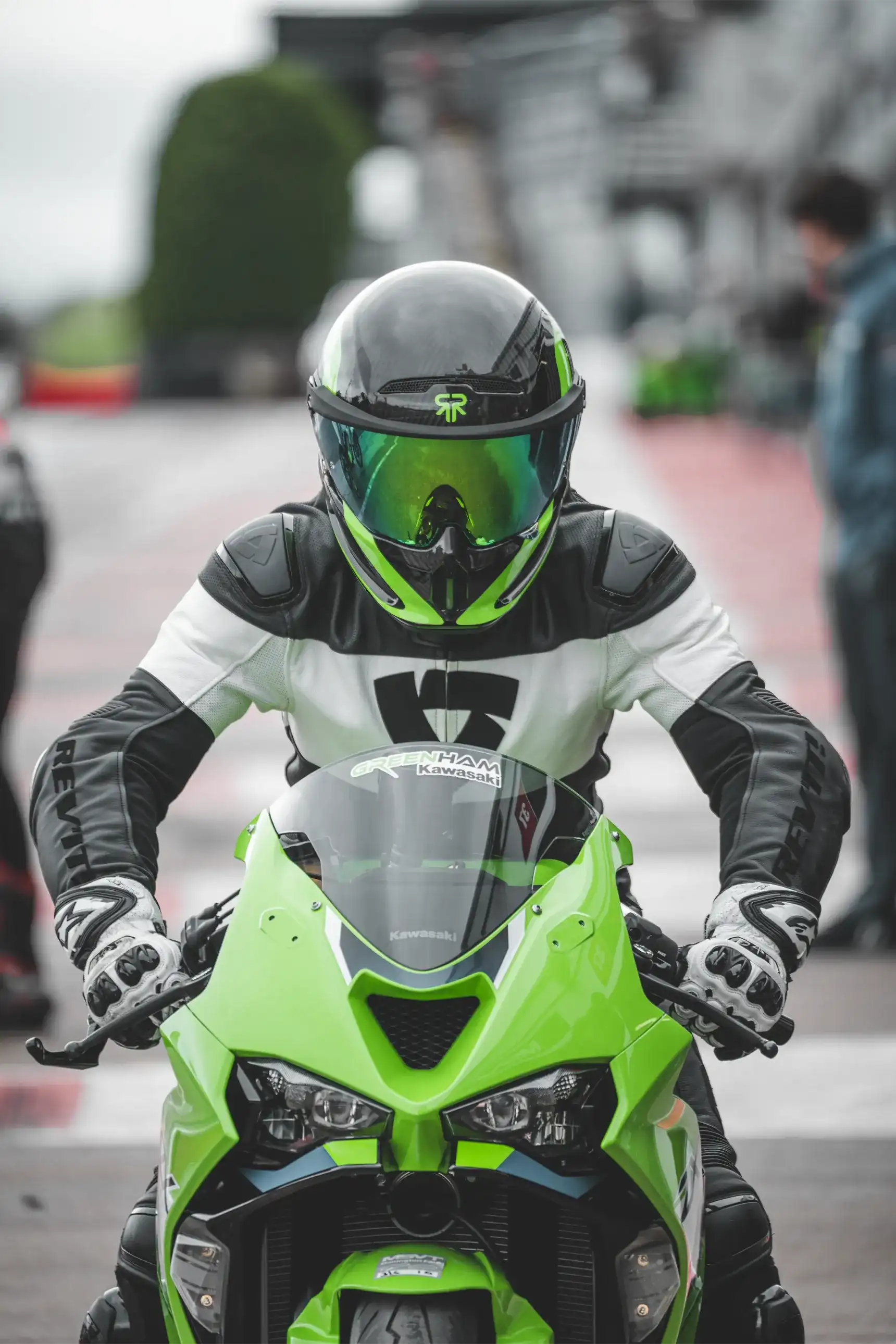
Prepare The Rider, Not Just The Motorcycle
Your concentration and decision-making matter just as much as the condition of the bike.
Get a proper night's sleep, eat before the event and bring enough water and suitable food to last the day. Track riding can be physically and mentally demanding, particularly in full protective equipment.
Taylor says that if you are away for a weekend, try to avoid drinking too much the night before your track day. A day in a set of leathers can be sweaty, and the extra alcohol can dehydrate you even further, which could hamper your judgement and raise fatigue levels.
Missing one session is better than riding while exhausted, dehydrated or unable to concentrate.
Take breaks when you need them. There is no requirement to complete every lap of every session. Come into the pits when something does not feel right, whether that is the motorcycle, the conditions or your own energy levels.
Also, be careful not to fill up too much at lunch time. A big lunch will sit heavy, and you may be tired and sluggish as your body tries to digest a lot of food. Keep it light, but perhaps add some energy drinks or electrolyte water into the mix. You can have a big meal when you finish.
Confidence develops when you feel prepared and in control. It rarely develops when you are tired, rushed or attempting to keep pace with someone else.
Preparation Creates Confidence
A successful track day is not measured only by speed. It is measured by how much you learn, how consistently you ride and whether you finish the day wanting to return.
- Prepare the bike
- Check your equipment
- Start steadily
- Use the support available
- Look after yourself throughout the day
Get those foundations right and you can spend less time worrying in the paddock and more time enjoying the reason you booked the track day in the first place.
Built For The Circuit
AT4.0 TRACK
ECE 22.06, DOT and ACU Gold certified, with bolt-on aero built for track use.