
Motorcycle Helmet Sizing Guide: How to Find the Perfect Fit
Buying your first motorcycle helmet can be a bit like buying new jeans: every brand fits slightly differently, and what feels good at first might loosen up over time. However, unlike jeans, a poorly fitting helmet isn't just uncomfortable, it can also be unsafe.
A poorly fitting helmet isn't just uncomfortable, it can also be unsafe.
In this guide, we'll walk through how to measure your head, how head shape affects helmet fit, what a safe helmet feels like, and the red flags that mean you've got the wrong size. Whether you're brand new to biking or just upgrading your lid, you'll finish this guide knowing exactly how to pick the right size, or at least know when you've got it wrong.
Why Helmet Fit Matters
A helmet isn't just another piece of riding gear; it's the single most important bit of protection between you and the tarmac. A poor-fitting helmet can:
- Come off in a crash (yes, this happens if it's too big).
- Create painful pressure points (if it's too small or the wrong shape).
- Distract you while riding (nothing worse than a nagging headache at 70mph).
- Reduce protection by moving around on your head instead of staying secure.
Getting the right size means more comfort, less distraction, and maximum safety.
Step 1: Work Out Your Head Shape
Before you grab a tape measure, it's worth working out what head shape you are. Helmets aren't one-shape-fits-all; some brands and some models will fit different shapes better than others. Most head-shapes fall into three main categories:
Long Oval
You may have an oval face, but your head shape will be longer from forehead to back of the skull versus ear-to-ear. Think rugby ball or American football, but the longer part is looking down on the top of the skull. If a helmet doesn't suit this shape, you'll feel pressure on your forehead and the back of your skull.
Intermediate Oval
This is the most common head shape, and is the head shape Ruroc helmets are built for. This head shape is slightly oval in the face, but not as long as the forehead-to-back shape. They tend to be longer in the face than they are wide, like the above, but slightly squashed.
Round
More like a typical ball shape, so round looking down on the head and round looking at the face, with largely equal width and length. If the fit's wrong, you'll likely feel pressure at your temples.
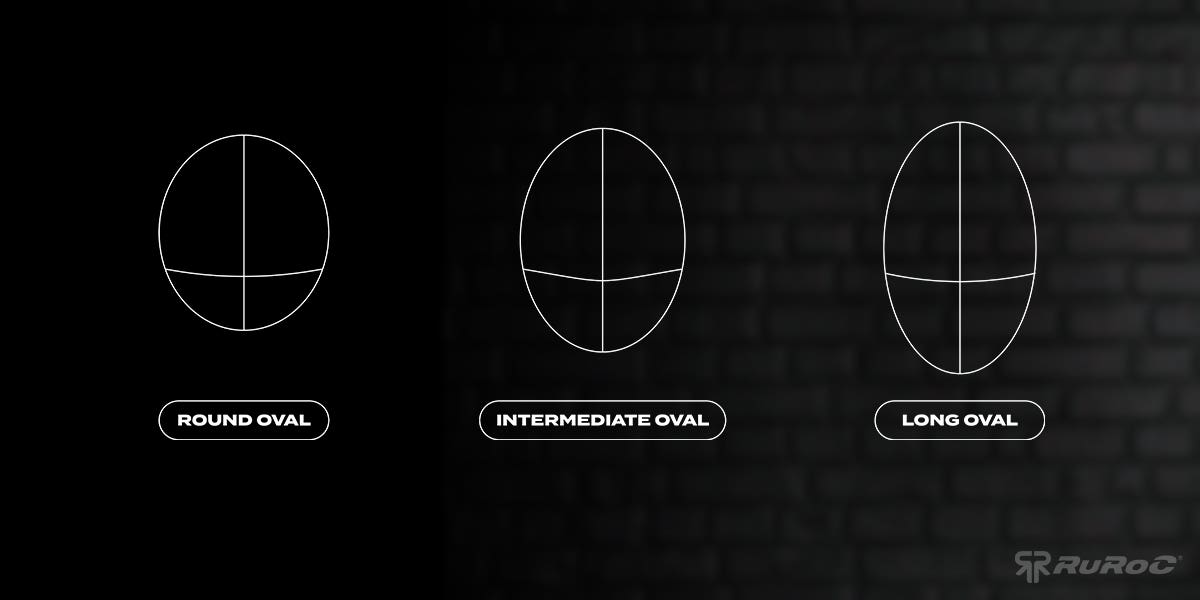
If you've ever struggled to find hats that fit, chances are you'll have difficulty finding a helmet that fits, but if you know your head shape you will be able to find a model or a brand that suits you perfectly. If you believe you are Intermediate Oval, then you'll be a great fit for our helmets!
Step 2: How to Measure Your Head Size
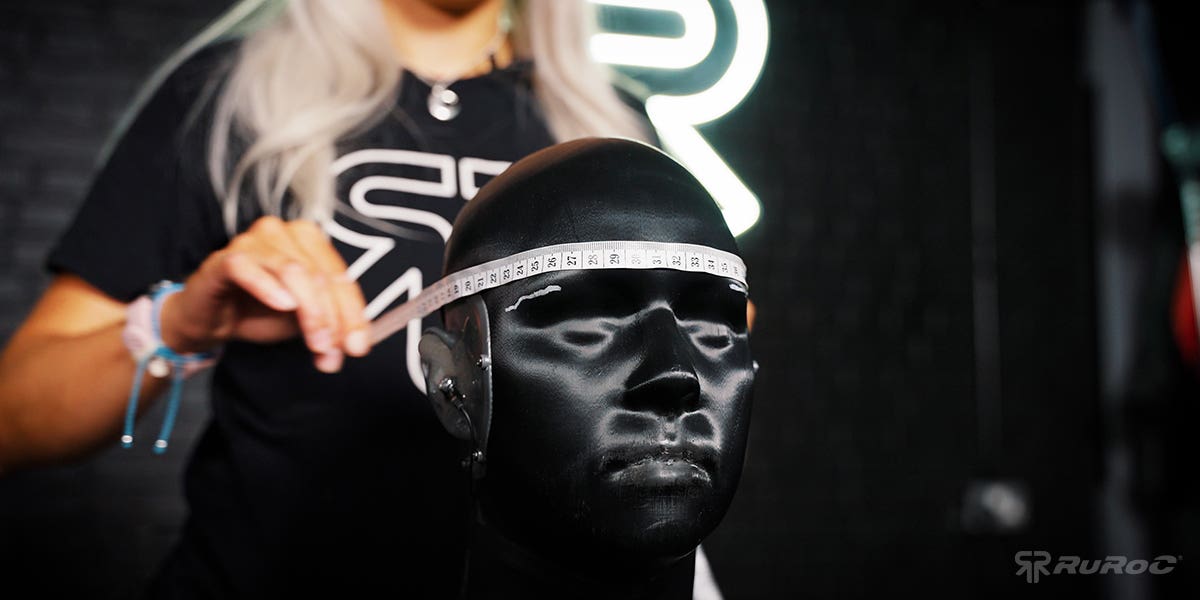
Now that you know your shape, it's time to get your size. Grab a soft tape measure (the bendy kind used for sewing) and follow these steps:
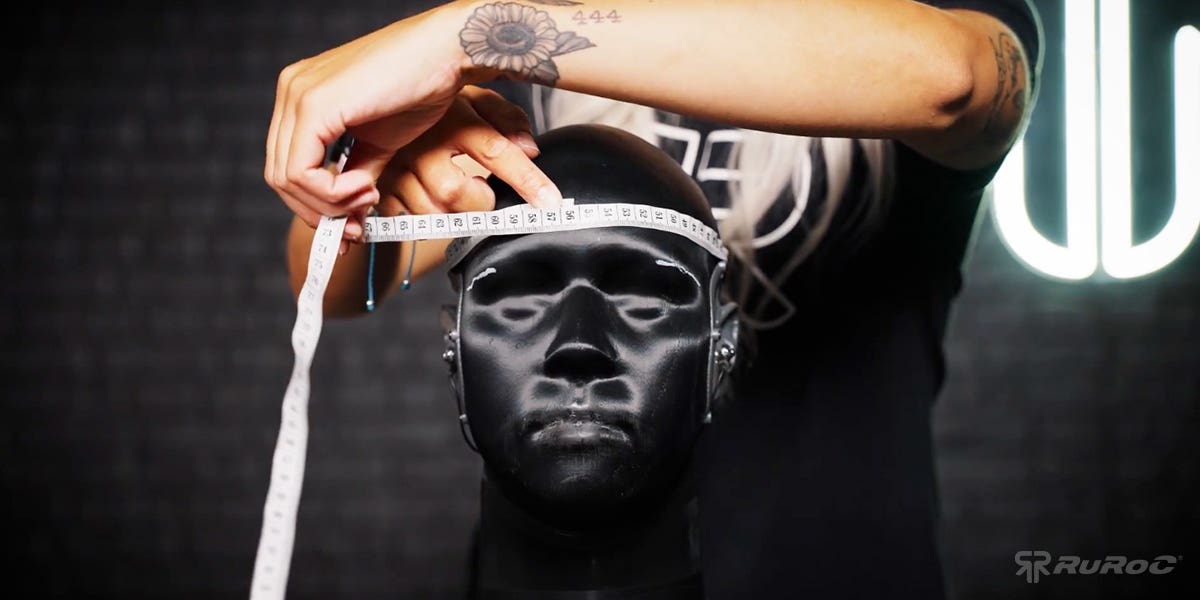
- Wrap the tape around your head just above your eyebrows and ears, circling the widest part of your skull.
- Keep it snug, but not tight. You're looking for a comfortable, natural measurement, not a squeezed lemon!
- Double-check. Take the measurement twice to be sure. Start and end at the forehead so you can see the measurements in the mirror.
- Compare with the sizing chart. For example, if you're 57cm (or 22.4 inches), that usually puts you in a Medium in most brands, but always check the brand's chart. We like to use measurements instead of letters to help avoid confusion and prevent sizing assumptions.
Remember: Helmets certified to the newer ECE 22.06 standard often have thicker padding, so they can feel a little tighter than older helmet models. Do bear in mind that liners will bed in slightly after a few rides.
Ruroc have two helmet families in their range: the AT4.0 (available in STREET, CARBON, and TRACK), and the EOX 2.0. We have more commonly used sizing on the EOX 2.0, like S and M, but the AT4.0 uses half sizes like SM and ML. Be sure to check the measurements rather than assuming the letters are the same as other brands. And don't worry if you get it wrong, we do free returns and exchanges.
Size Calculator
Step 3: Putting a Helmet On (The Right Way)
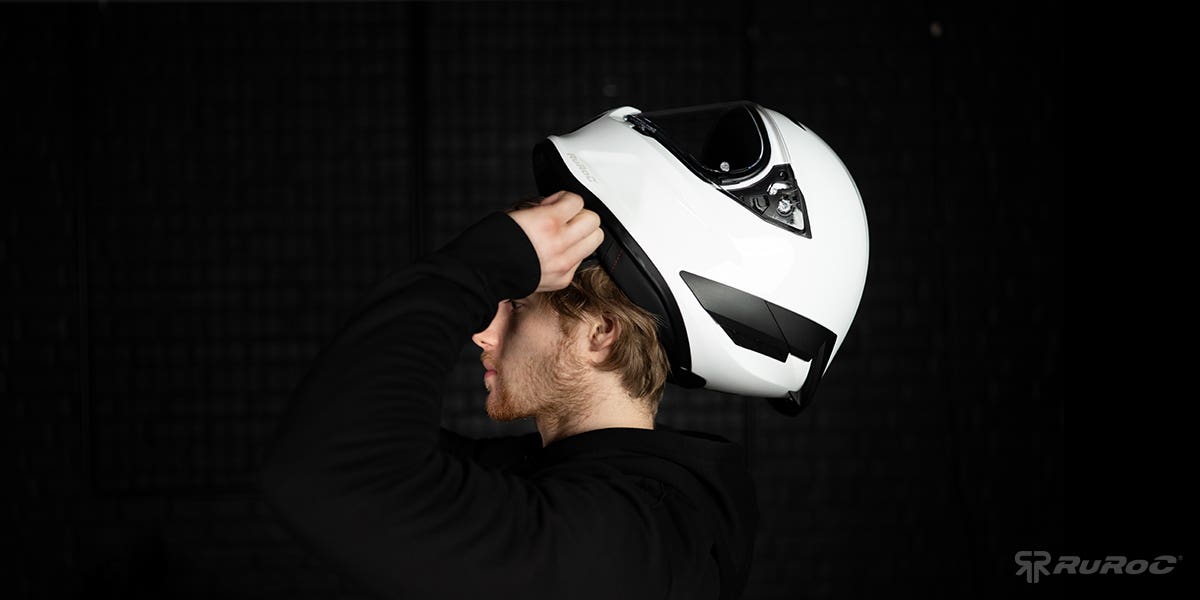
Here's where Ruroc differs a little, trying to jam the helmet straight down over the top of your head won't work. Our sculpted helmets require a slightly different approach that comes on from the back of the head. Instead:
- Pull the straps apart. This will create a firm grip on the helmet and open the thicker liner.
- Slide the helmet on from the back of your head. Roll it forward over your head and down your face.
- To take it off, reverse the move; lift from the chin and roll it backwards to take it off the back of your head.
This way, you're not fighting the narrow entrance against the widest part of your head.
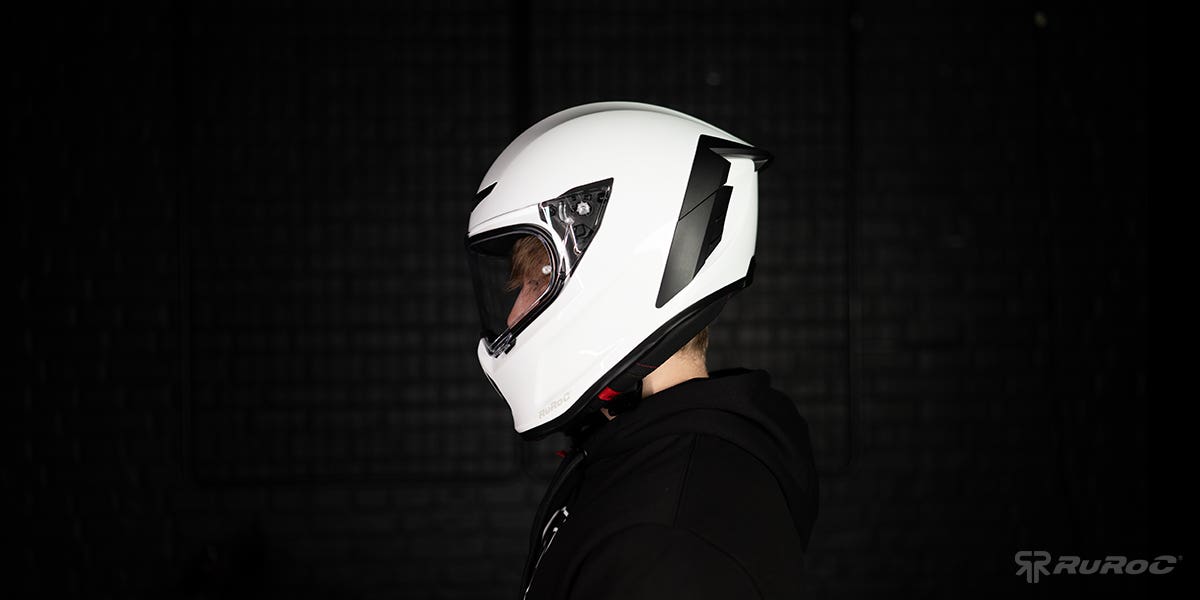
Watch: How to size a Ruroc motorcycle helmet
Step 4: How to Tell if Your Helmet Fits
A good helmet fit should feel snug, secure, and slightly firm, but much like a handshake, not a headlock! Here's how to check:
No Wobble Test
Hold the chin bar and gently move it side-to-side or up-and-down. If the helmet shifts independently of your head, it's too big.
Finger Test
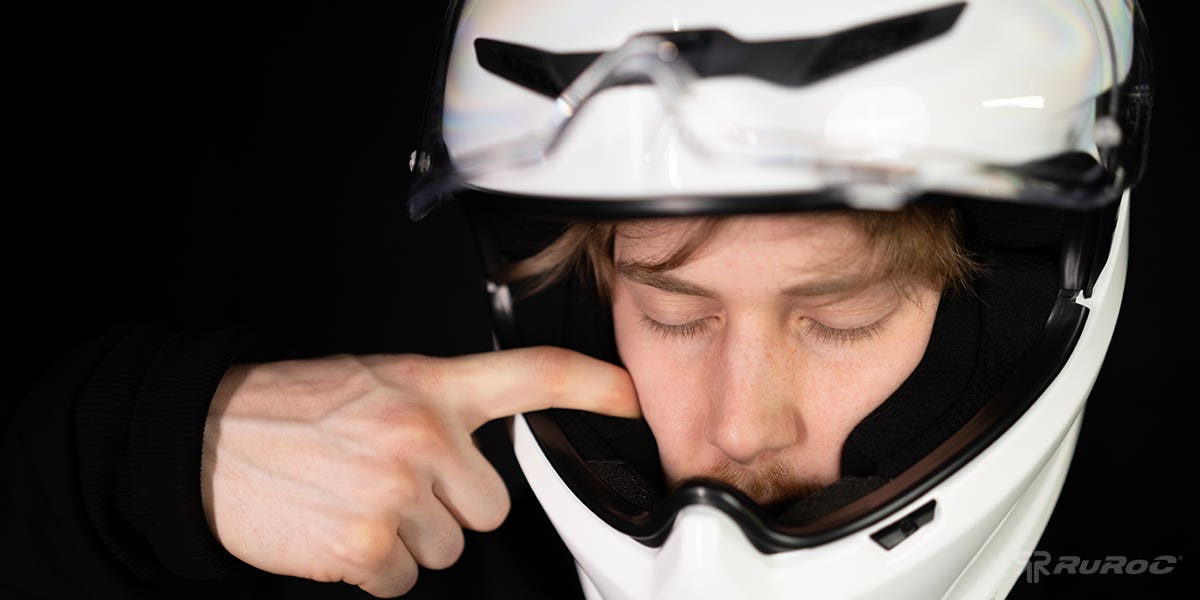
You should not be able to slip your fingers easily under the liner at your temples or cheeks.
Cheek Pad Check
Pads should touch your cheeks without squashing them flat. Your cheeks may be squished a little, but you should be able to move your mouth to talk, laugh or shout at poor motorists.
Comfort Over Time
New helmets bed in after a few rides, so a slightly tight fit at first is normal. Too loose at the start means it'll only get looser.
Step 5: Spotting a Bad Fit
If your helmet is the wrong size, your head will tell you. Common signs include:
- Pressure headaches (too small).
- Red marks on your forehead or temples (wrong shape).
- Wind noise or buffeting at speed (too loose).
- Chin strap digging in (wrong adjustment).
- Helmet lifting or shifting when you turn your head (definitely too big).
Rule of thumb: If you can shake your head in any direction and the helmet wiggles, it's likely to be too big. If your helmet gives you pressure points in any place, it's likely to be too small or designed for a different head shape.
Customising Your Helmet Fit
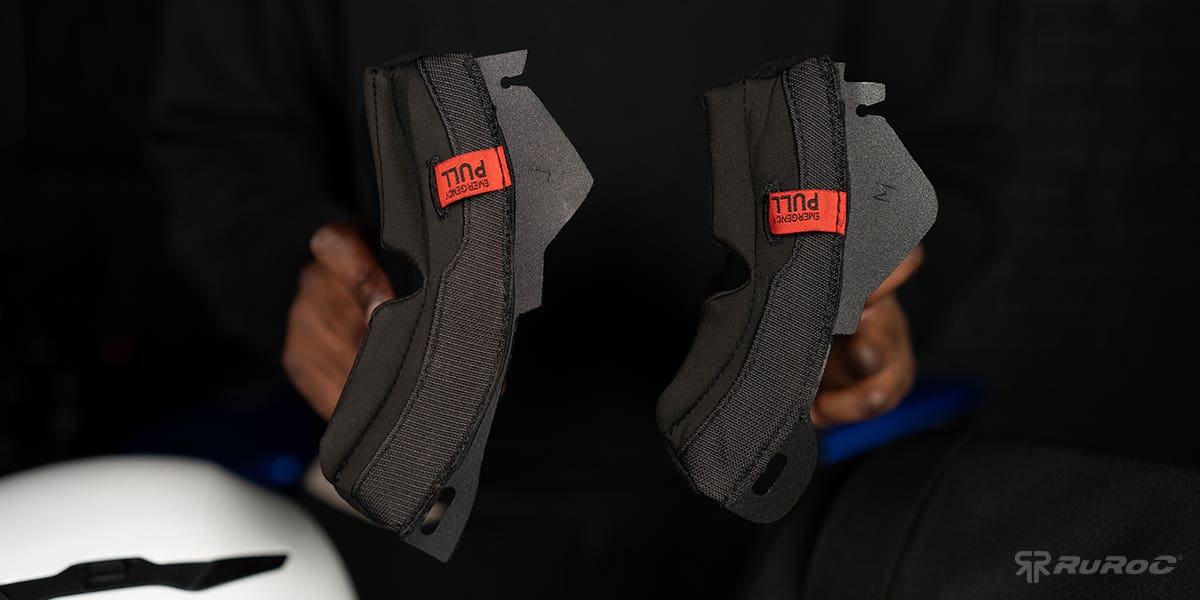
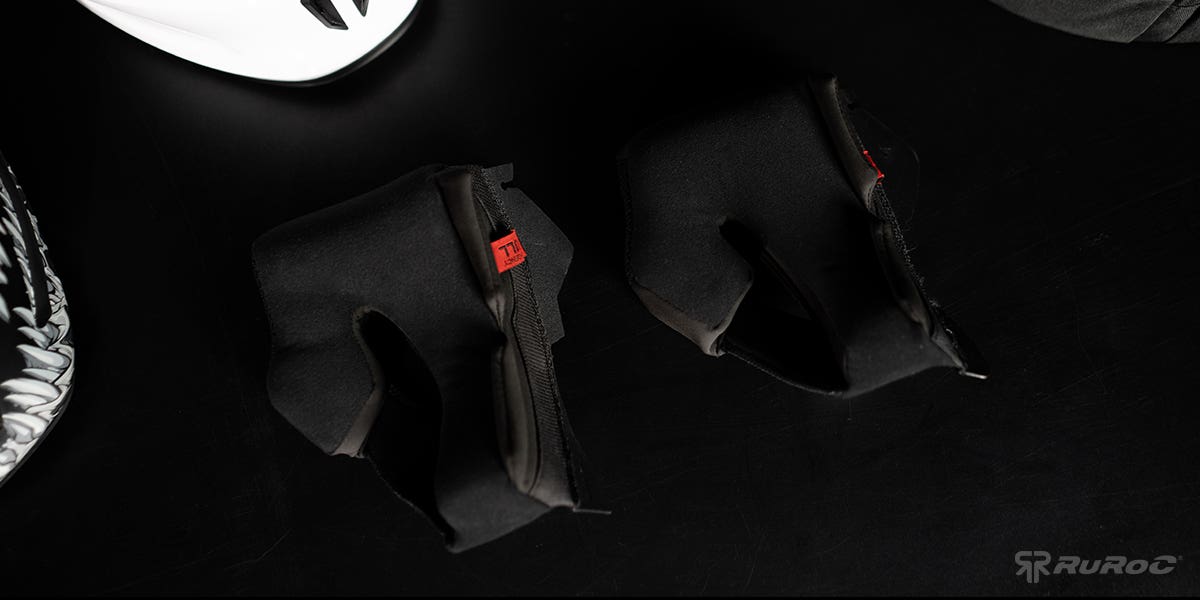
Some helmets, like the Ruroc EOX 2.0, come with cheek pads options in the box to tailor your fit. Every EOX 2.0 helmet comes with additional slimline cheek pads in the box, so you can fine-tune the fitting of your helmet without swapping sizes. This can help bridge the gap between standard sizes (XS, S, M, L, XL) without creating pressure points elsewhere.
It's a simple swap, and worth trying if your helmet is just a touch too snug or too loose in the cheeks.
Final Thoughts
Picking the right helmet size isn't rocket science, but it is kind of a science. Measure your head properly, understand your shape, and always go for a snug (not sloppy) fit. Remember, your helmet will loosen slightly as the padding beds in, so start firm. And don't forget, if you're buying Ruroc, you can make exchanges and refunds free of charge, usually shipping within 24 hours.
Ride safe, measure twice, and never settle for a wobbly lid.
Motorcycle Helmet Sizing FAQs
How to know what motorcycle helmet size you need?
Ideally you should measure your head with a fabric tape measure. Wrap the tape around your head just above your eyebrows and ears, circling the widest part of your skull. Use this measurement to check your motorcycle helmet's size chart. Also, bear in mind that your head-shape can affect the sizing, so knowing what the name of your head shape can help you select the best brand and model for your head.
How do I measure my head without a tape measure?
No tape? No problem. Use a piece of string or a shoelace, wrap it around your head above your ears and brows. Carefully mark the overlap and then measure the string against a ruler. Old school, but it works.
Should a motorcycle helmet be tight?
Yes, but not so tight it hurts. A helmet should feel snug with even pressure all around your head, but it shouldn't give you a headache or leave deep marks. Think "firm hug," not "headlock". If you get pain from your helmet, it may be too small, or you may have a head shape that doesn't work with your chosen helmet.
How do I know if my helmet is too big?
If you can grab the chin bar and move it side-to-side while your head stays still, it's too big. Other giveaways include the helmet lifting at speed, wobbling when you shake your head, or being able to fit fingers between the liner and your skin.
How long does it take for a helmet to "bed in"?
A motorcycling helmet usually takes 15 - 20 hours of riding to bed in. The cheek pads and liner will soften and better mould to your head shape, making the helmet feel more comfortable over time. Having multiple cheek pad sizes can help fine-tune things during the bedding-in stage.
Do different brands fit differently?
Absolutely. Just like a pair of jeans, some run tighter, some more generous, some designed for certain shapes, and some just have their own fit "personality". Always check the brand's sizing chart rather than assuming you're the same size everywhere. Your head shape will determine whether you fit that particular helmet model.
Can I wear a helmet if I have the wrong head shape?
Yes, but the right shape matters to comfort. If you've got a round head and wear a long oval helmet, you'll feel pressure at your temples. You may get away with short rides and commutes, but long-distances can cause serious pains. It's best to match your head shape to the helmet shape to avoid hot spots.
What happens if I wear the wrong size helmet?
At best, you'll be uncomfortable. At worst, your helmet could lift or even come off in a crash. An oversized helmet won't protect you properly, and one that's too small can cause headaches and distraction. Neither is a good option.
Should my cheeks feel squashed in a new helmet?
A little bit, yes. New cheek pads should gently push against your cheeks. You should still be able to talk and move your jaw, but if it's uncomfortable, or if you look like a chipmunk storing nuts for winter, you might need thinner cheek pads.